- New & Used Industrial Alarm Parts Items
- sku: 1404801454215531
- MICROCHIP 10-00235-02-R17
10-00235-02-R17 MICROCHIP Mplab
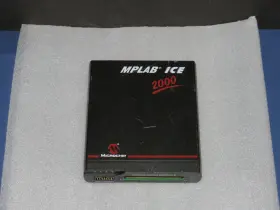
| Brand | MICROCHIP |
|---|---|
| Manufacturer Part Number | 10-00235-02-R17 |
| Type | FIRE ALARMS |
Review MICROCHIP Mplab Ice
The Microchip Technology MPLAB ICD 2000 In-Circuit Debugger and Programmer (Part No: 10-00235-02-R17) is an advanced tool designed for in-circuit debugging and programming of microcontrollers and DSPs. This particular version, marked as R17, is compatible with a wide range of Microchip Microcontroller Units (MCUs) and Digital Signal Processors (DSPs) based on the PIC18, PIC16, PIC12, PIC10, PIC9, and dsPIC30F/DSC families.
Featuring the MPLAB Real-Time Operating System (RTOS) USB stack and the Graphical User Interface (GUI) of MPLAB ICD 2, this debugger helps you develop and debug Microchip microcontroller and DSP applications efficiently. It provides a seamless interface for in-circuit programmer functions, allowing for code deployment during development or production stages.
Key features include:1. In-Circuit Debugging:Easily connect the ICD 2000 to your development board and debug in real-time using the built-in interface. Set breakpoints, watchpoints, and evaluate expressions on the fly, leaving you with greater control over the testing process.
2. In-Circuit Programming:The MPLAB ICD 2000 enables in-circuit programming of microcontrollers, requiring no external programmer or JTAG interface. Now you can spirit away the external programmer from your lab bench and consolidate all development and debugging operations into a single tool.
3. Higher Pin Count:Able to support 100 I/O pins, it's suitable for working on comprehensive projects. Any necessary configuration can be done through the user-friendly MPLAB ICD 2 GUI and IDE.
4. USB Interface:With a USB interface, the ICD 2000 connects to your PC for easy operation. No last-minute adapter installations are necessary, ensuring a hassle-free debugging experience.
5. Versatile:The MPLAB ICD 2000 is compatible with various in-circuit 1-wire interfaces such as EEPROMs, temperature sensors, and other devices. Envision the possibilities of not having to switch tools to program external devices.
6. MPLAB Real-Time OS Support:For users working with embedded systems, MPLAB RTOS support is a game-changer. This in-circuit debugger boasts complete RTOS USB and Ethernet stack integration, making it a valuable ally in the development and maintenance of real-time operating system projects.
7. Cross-Compatibility:This in-circuit debugger also comes with pre-installed drivers, ensuring proper functioning with popular development environments like MPLAB X IDE, MPLAB XC Compiler, and Microchip Studio.
In summary, the Microchip Technology MPLAB ICD 2000 In-Circuit Debugger and Programmer (10-00235-02-R17) is a highly versatile, essential tool designed for convenience and efficiency in microcontroller and DSP development projects. With its extensive compatibility, the ICD 2000 allows you to debug, program, and manage external devices all through a single interface, streamlining your lab workflow.
Pros and Cons of Buying Microchip MPLAB IDE 2000 (Microchip 10-00235-02-R17)
I. IntroductionThe Microchip MPLAB IDE 2000 (Microchip 10-00235-02-R17) is a popular integrated development environment (IDE) designed for programming microcontrollers and microprocessors from Microchip Technology. This article aims to provide you with a rational and unbiased assessment of the product by discussing its key features, advantages, disadvantages, and an ultimate recommendation.
II. Features1. Compatibility: Supports a wide range of Microchip development tools and microcontrollers.
2. User Interface: Intuitive, easy-to-use graphical interface.
3. Code Editor: Powerful editor for coding and debugging.
4. Hardware Debugging: In-circuit debugging and emulation capabilities.
5. Integrated Compiler: MPLAB C18 and C30 compilers are included.
6. Simulation and verification: Support for software and hardware simulation.
7. Integrated Librarian: Includes a library manager for managing MPLAB libraries.
III. Pros1. Versatility: Offers comprehensive solutions for various Microchip projects.
2. Productivity: Facilitates increased coding and debugging efficiency.
3. Cost-effective: A single license supports multiple projects and collaborators.
4. Depth of Documentation: Detailed user guide, example projects, and other resources.
5. Effortless setup: The install process is straightforward and user-friendly.
IV. Cons1. MPLAB X Integration: The 2000 series and MPLAB X possess different features, which can make transitioning between the two confusing.
2. Occasional Compatibility Issues: Occasional compatibility issues with newer microcontrollers and devices.
3. Learning Curve: New users may need time to familiarize themselves with the IDE and its features.
4. Limited Integration: Lacks advanced features and capabilities of newer IDEs, such as unified project management and code profiling.
V. ConclusionThe Microchip MPLAB IDE 2000 is a valuable tool for developing projects based on Microchip microcontrollers. Its compatibility, intuitive user interface, extensive documentation, and ability to increase productivity are significant advantages. However, the occasional compatibility issues, limited integration, and learning curve may pose challenges. In conclusion, this IDE is recommended for those who work regularly with Microchip devices and prefer using a dedicated associated IDE. Additionally, users seeking advanced integration and the unified project management features present in more contemporary IDEs may be better off exploring alternative options.
VI. Recommendation
If you're working on tasks related to Microchip microcontrollers and feel confident working with an established IDE, the MPLAB IDE 2000 would serve your needs well. However, consider its limitations and weigh whether more modern IDEs align better with your project requirements and personal preference. For first-time Microchip users, dedicate some time to the learning process to thoroughly understand the IDE before diving into a substantial project.
Details:
Unit includes a 30-day warranty.
specifications alarmpartsacc:
- brand: Microchip
- mpn: 10-00235-02-r17
- type: Fire Alarms
shipping alarmpartsacc:
- class: standard, one-day
- transit: 3-9 days
- type: fixed
- service: standard, overnight
offer alarmpartsacc:
- prices: $62.95–$99.99
- item condition: Used
- options: ship-to-home
- availability: in stock
- sold #: 31
- started: january 22, 2025
- in stock #: 2
- best offers: true
seller alarmpartsacc:
- # reviews: 8405
- rating: 99.0%
- city: kempner, texas
returns alarmpartsacc:
- paid by: seller
- time: 30 days
- method: money back
- policy: returns accepted
payments alarmpartsacc:
- credit card: visa
- wallet: paypal
- other
general alarmpartsacc:
- category: Business & Industrial > Surveillance Equipment > Systems > Alarm Parts Accessories
Similar Items:
- Microchip 10-00319-r12 Mplab Icd 2 With Power Adapter Unit includes a 30-DAY warranty...(January 22nd, 2025)
