- New & Used Industrial Alarm Parts Items
- sku: 2747612870389622
- PHILIPS LTC-4671
LTC-4671 PHILIPS Phillips Transceiver Data Transmitter Box
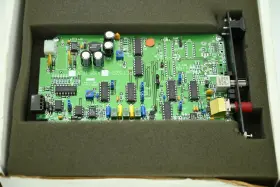
| Brand | PHILIPS |
|---|---|
| Manufacturer Part Number | LTC-4671 |
| Model | LTC 4671 |
| Type | TRANSCEIVER |
| Unit Type | UNIT |
Review PHILIPS Phillips Ltc Rs485 Transceiver Data Transmitter/receiver New In Box
The Philips LTC-4671 is a versatile RS-485 transceiver data transmitter/receiver designed to facilitate communication in industrial automation systems, building control applications, and other similar environments. This transceiver is manufactured by Philips Semiconductors, a leading name in the semiconductor industry, known for its high-quality electronic components.
This LTC-4671 transceiver is an integrated circuit that can be easily integrated into microcontroller-based systems or other digital circuits to enable bidirectional communication over two wires in a differential signaling configuration. The device supports a maximum data rate of 10 Mbps and can handle a total cable length of up to 4000 meters.
Key features of the Philips LTC-4671 include:1. Differential signaling: The transceiver supports fully differential signaling, ensuring immunity to common-mode noise and enabling longer cable lengths compared to single-ended signaling.
2. Automatic Repeater Function (ARF): The device supports ARF, which allows multiple transceivers to be connected in a bus configuration without the need for external repeaters, simplifying system design and reducing costs.
3. Galvanic isolation: The LTC-4671 offers galvanic isolation between differential and single-ended parts of the circuit, protecting the system from ground loops and electrical interference.
4. Protection against overvoltage: The transceiver is designed to protect against overvoltage conditions, ensuring reliable operation in harsh industrial environments.
5. Low power consumption: The LTC-4671 is an energy-efficient solution, with typical power consumption of just 22 mW during transmission and 11 mW during reception.
6. Easily configurable: The device includes on-chip enable/disable pins for transmit and receive functions, allowing for easy configuration and control of the transceiver.
7. RoHS and WEEE compliant: The Philips LTC-4671 is compliant with the RoHS and WEEE directives, making it a suitable choice for environmentally conscious designs.
In summary, the Philips LTC-4671 is a high-performance, versatile RS-485 transceiver data transmitter/receiver designed for industrial automation and control applications. Its differential signaling, automatic repeater function, galvanic isolation, overvoltage protection, and low power consumption make it an ideal choice for building control systems, process control, and other similar environments where reliable communication over long distances is essential.
Philips LTC-4671 Transceiver: A Comprehensive Analysis
The Philips LTC-4671 is a versatile and widely-used RS-485 transceiver with data transmitter and receiver capabilities. In this analysis, we will discuss its key features, advantages, and disadvantages.
Features:1. The LTC-4671 is a fully integrated RS-485 transceiver, consisting of both transmitter and receiver functions in a single package.
2. It supports a wide operating voltage range (4.5V to 5.5V) and can be used in various industrial applications.
3. The device features a built-in driver with current limiting and overvoltage protection.
Advantages:1. Dual Functionality: With both transmitter and receiver functions integrated into a single chip, the LTC-4671 reduces the number of components required in a system, simplifying the design and reducing the overall cost.
2. Wide Operating Voltage Range: The LTC-4671's wide operating voltage range makes it suitable for use in various industrial applications where voltage levels may fluctuate.
3. Protection Features: Built-in driver protection, such as current limiting and overvoltage protection, ensures the device's longevity and reliability in harsh environments.
Disadvantages:1. Limited Data Rates: The LTC-4671 is not designed to handle high data rates, making it less suitable for applications requiring fast data transmission.
2. Power Consumption: Although the device's power consumption is relatively low, it may not be the best choice for power-sensitive applications.
3. Size: Compared to other transceivers in its class, the LTC-4671 may be larger in size, which could impact design considerations for space-constrained applications.
Conclusion:The Philips LTC-4671 RS-485 transceiver offers several advantages, including versatility, wide operating voltage range, and built-in protection features. However, it may not be the best option for applications requiring high data rates, low power consumption, or minimal size. Considering these factors, the LTC-4671 is recommended for applications where its advantages align with the project requirements.
Details:
As always I try to give as many pictures for determining the condition of item being listed. Shipping: most of the items I sell are calculated shipping with USPS priority mail. I try my best to give an unbiased and honest opinion of the item being listed. I strive for fast shipping.
Condition: new special notes: none, please refer to the pictures for any further details on item as well condition and I will gladly answer questions. Shipping and packing material is not factored into shipping comes out of my pocket. You are buying on the item listed in title.
Sometimes my may be brief, but I put most of time and effort in providing numerous high quality images the item being listed.
specifications alarmpartsacc:
- brand: Philips
- mpn: Ltc-4671
- model: Ltc 4671
- type: Transceiver
- unit type: Unit
payments alarmpartsacc:
- wallet: google-pay
- other
- credit card: discover
general alarmpartsacc:
- category: Business & Industrial > Surveillance Equipment > Systems > Alarm Parts Accessories
returns alarmpartsacc:
- time: 30 days
- policy: returns accepted
- paid by: seller
- method: money back
seller alarmpartsacc:
- # reviews: 11624
- city: springfield, ohio
- rating: 99.9%
shipping alarmpartsacc:
- carrier: usps, ups, fedex
- type: fixed
- service: usps ground advantage, ups ground, fedex ground / fedex home delivery
- transit: 5-11 days
- class: standard
offer alarmpartsacc:
- options: ship-to-home
- best offers: true
- in stock #: 2
- availability: in stock
- started: september 19, 2025
- prices: $14.80–$55.00
- item condition:
- New – Open box
- New
- sold #: 15
Similar Items:
- Bosch Philips Ltc-4645 Video Receiver Card Ltc 4645 30 Day Warranty 2433TM-006-1012F. Items shipped by USPS priority mail. Philips video receiver card ltc 4645 - 30 day warranty. Expedited shipping services are available upon request...(August 14th, 2024)
- Burle Security Tc8561a-2 New Receiver driver 1 Channel Philips Bosch 120v Items are listed in the that we feel fits them most suitably. In this case, the item is believed to be used and sold as all faults without warranty...(May 6th, 2025)
- Philips Connect 77-6500-13j Phillips Technologies Solarnet Some items may have slight cosmetic damage which is noted in the condition of part and can be seen pictures. Fully guaranteed. Phillips connect technologies Sloane 77-6500-13J, new - old stock inventory as pictured not in original box item comes shown and only includes what is the photos, please ...(June 12th, 2025)
- Phillips Connect 77-6700-13at Philips Vehicle Tracker 77-6700-13j With Cable Produced by phillips connect, this model offers 3G/4G connection for Central monitoring from the phillip connect platform. This product ensures safety and security for monitored vehicles, providing peace of mind fleet management asset protection...(September 27th, 2025)
